Rab Island
You are here: Home > Destinations > Croatia > Adriatic Islands > Rab Island
About Rab Island
Rab Island
Rab is one of the greenest islands in the Adriatic, known for its extensive pine forests, sheltered bays and a generous number of sandy beaches — a rarity in Croatia. Its mild climate is shaped by the island’s position beneath the Velebit mountains, which protect it from the colder northern winds.
Human settlement here is ancient. The settlement of Arnia (also recorded as Arba or Arva) was first mentioned in the 1st century BC, when Octavius Augustus proclaimed it a town and municipality. The Croatian name Rab appears later, in records from 1446, associated with the foundation of the island’s Franciscan monastery. Rab’s most celebrated historical figure is Marin, a stonemason born here in the 4th century who later settled in Italy and founded what became the Republic of San Marino.
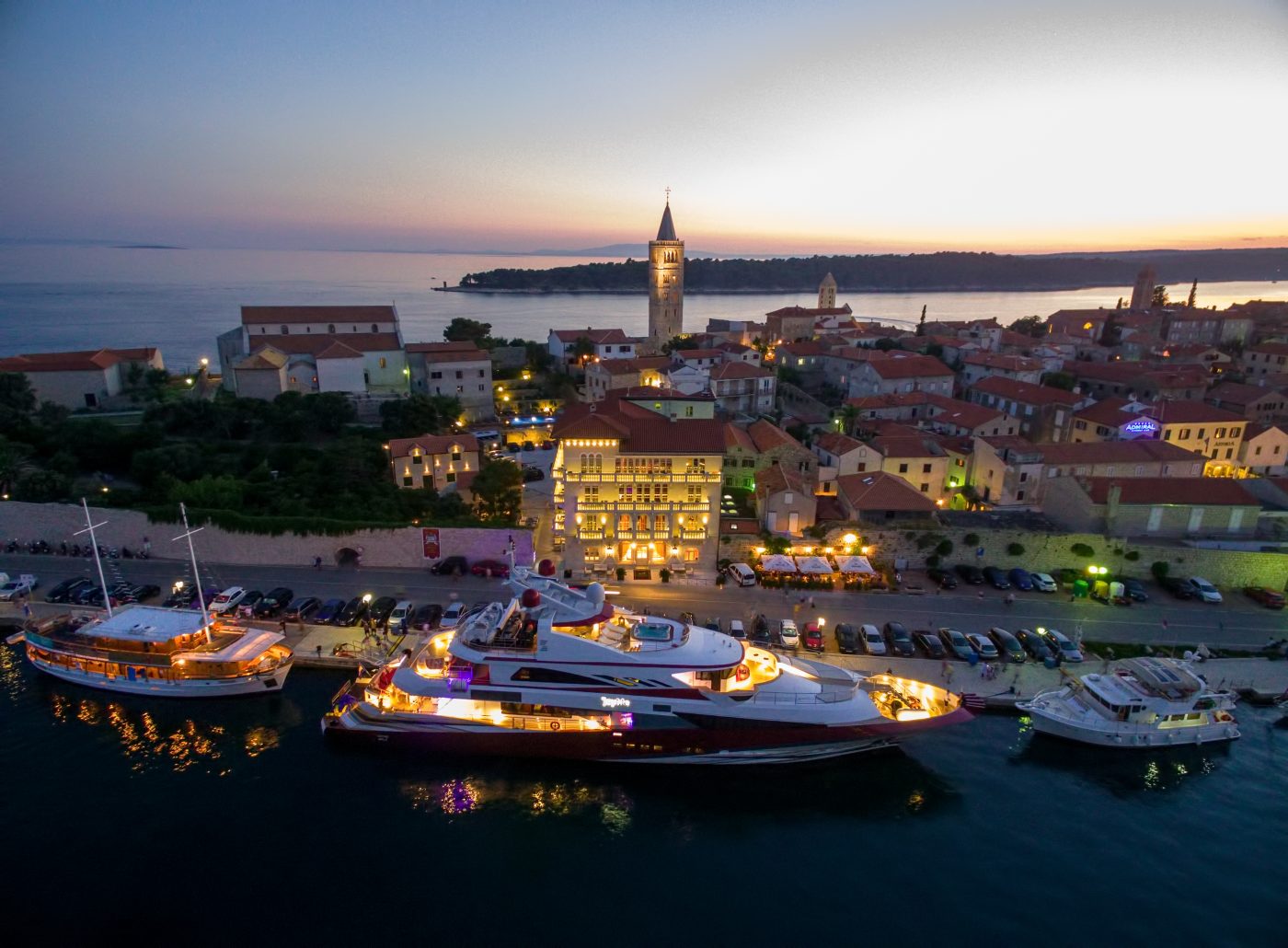
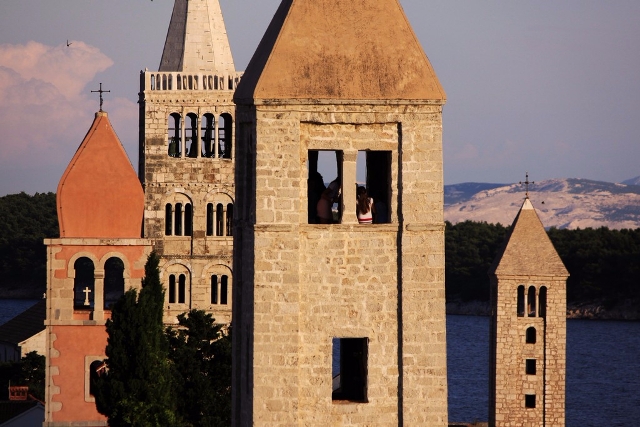
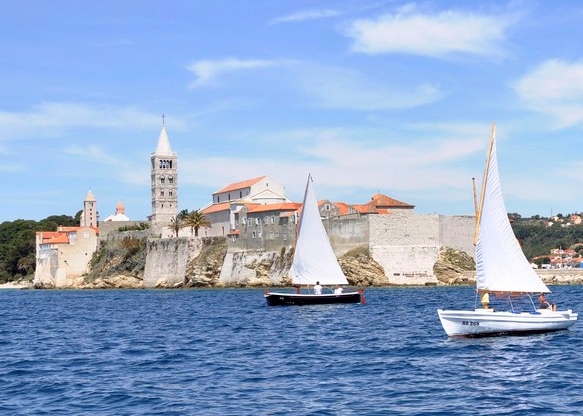
Rab has a single main settlement, Rab Town, dramatically positioned on a narrow isthmus and instantly recognisable for its four slender bell towers rising above the rooftops. The town contains one of the richest concentrations of historic architecture in Croatia, with monasteries, churches and palaces displaying styles from the early medieval period through to the Baroque. The central street, Srednja ulica, is lined with 15th‑century buildings and leads to the Town Loggia, completed in 1509. From the 26‑metre‑high bell tower, sweeping views extend across the terracotta roofs and out to sea.
At the edge of the old town lies Komrčar Park, Rab’s pride and joy. In 1883, senior forester Justus Belia began planting 12 hectares of pastureland, transforming it into a lush oasis. Thanks to his efforts, the park now contains Aleppo pines, wild olive trees, palms, cacti and agaves. A promenade and town beach run alongside the park beneath the shade of century‑old pines, and a statue of Belia stands at the entrance in recognition of his legacy.
Rab hosts a lively cultural calendar throughout the summer. Street‑painting events turn Middle Street into an open-air gallery, while concerts take place at the Prince’s Castle Gallery and at the Church of the Holy Cross during the Rab Musical Evenings (June–August). The Rab Knights’ Tournament, held several times each summer, recreates the island’s medieval traditions. Another major event is Rapska Fjera, when thousands of locals recreate historical crafts and scenes, bringing the medieval spirit of the town vividly to life.
Beyond Rab Town, the island’s natural landscapes are equally rewarding. To the west lies Kalifront Forest, the largest woodland on the island and protected for its ecological value. Nearby is the Franciscan Monastery of St Euphemia, dating from 1458, known for its painted works and a remarkable ceiling featuring 27 scenes from the life of St Francis of Assisi. In the north, Kampor combines peaceful surroundings with monastic heritage, while Lopar, on some of Rab’s finest sandy beaches, is now a thriving resort. Its best‑known stretch, Paradise Beach, is prized not only for its sand but also for its long, shallow, family‑friendly shoreline.
Rab is an island of gentle landscapes, rich history and welcoming coastlines — a place where natural beauty and cultural depth complement each other with effortless ease.
We look forward to being of service.
.jpg)
.jpg)
.jpg)
.jpg)
.jpg)
.jpg)
.jpg)
.jpg)
.jpg)
Flexible Tailor-Made Holidays
- We believe passionately that no two holidays should be the same.
- With our flexible tailor-made holiday options you can travel at your own pace.
- Rediscover a city, a resort or an island in a weekend or longer.
- Take a small group tour or embark upon a more adventurous trip.
Trusted Service
- ATOL cover for flight inclusive holidays.
- One of us at Rediscover the World is very likely to have visited the hotels and travelled along the routes on your itinerary.
- Dynamic, comprehensive travel app with all your documents, maps and much more.
- Full financial protection for your holiday (TTA).
Why book Croatia with us ?
- More than 30 years experience of the region
- Unrivalled expertise of local partner
- Fly-drive holidays in Croatia & neighbours
- Island Hopping / Activity holidays
- Food-themed breaks & Christmas Markets
- Honeymoons
- 24hr assistance in Croatia